2026-11-05 ·
What to Do After a Burst Pipe in a Fort Worth Home
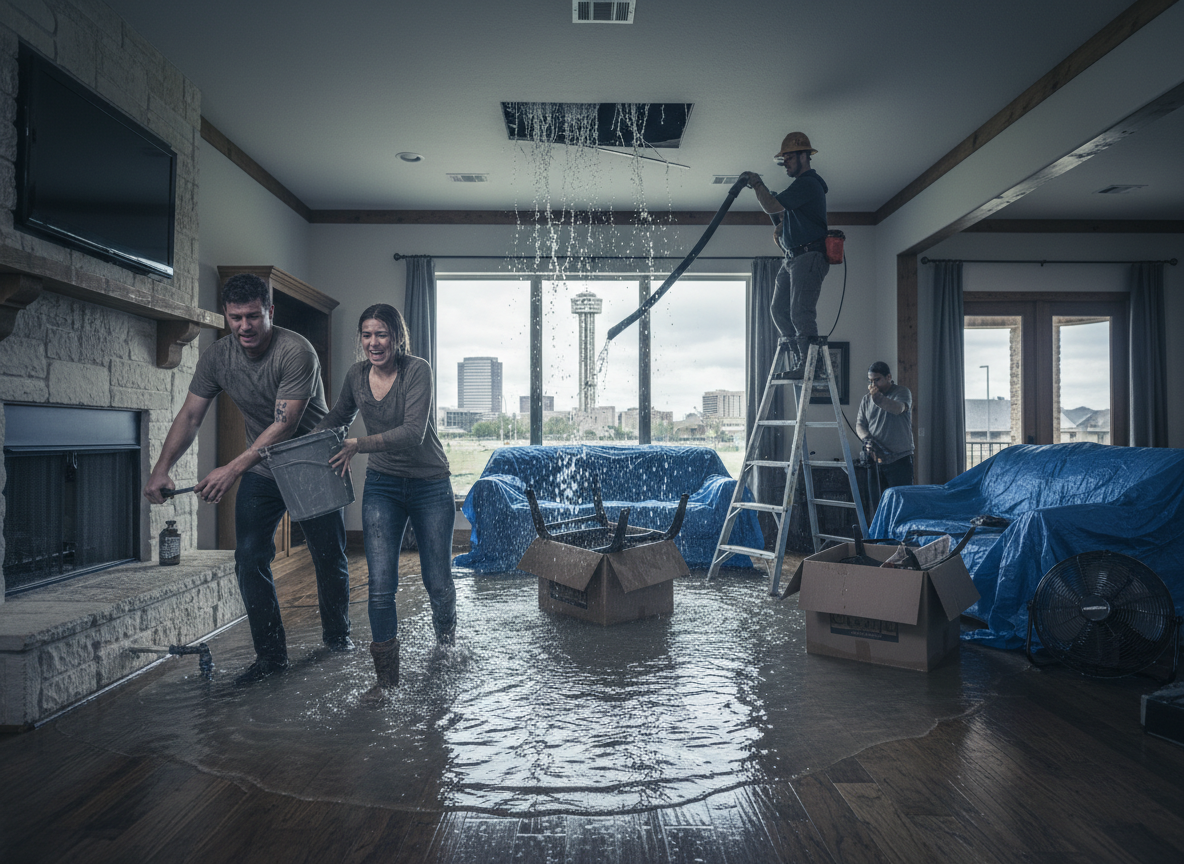
After a burst pipe in a Fort Worth home, shut off the main water valve right away, then contact a water damage restoration team to begin extraction and drying before secondary issues set in. This sequence limits saturation in walls and floors common to homes built before 1980 in areas like Arlington Heights and the Cultural District.
Shut Off Water and Secure the Site
Locate the main shutoff valve, often near the water heater or where the line enters from the street, and turn it clockwise until tight. In Stockyards or Downtown properties with slab foundations, water can travel quickly under the slab, so move furniture and valuables to higher ground immediately. Avoid electrical outlets near standing water and open windows if outdoor humidity allows, though Fort Worth's humid subtropical summers often keep indoor moisture high. Document the scene with photos for any insurance claim while the water is still visible.
Evaluate Affected Materials and Hidden Moisture
Check drywall, baseboards, and flooring in TCU area bungalows where pipes from the 1950s and 1960s commonly fail at joints. Use a moisture meter if available to find water that has wicked into subfloors, especially in single-story homes common around Sundance Square. Mild winters still bring occasional freezes that crack older galvanized lines, while hot summers expand joints in copper. Homes near Keller or Mansfield often sit on clay soils that shift and stress supply lines over time.
Begin Professional Water Damage Repair
Call for water damage repair to extract standing water and set up drying equipment sized for the square footage involved. Technicians familiar with Tarrant County homes know how quickly moisture travels through lathe-and-plaster walls in Arlington Heights properties. Skip household fans alone, as they can spread spores when humidity stays above 60 percent for days. Follow up with water damage restoration if carpet or padding must be removed and disposed.
Address Drying Time and Mold Risk
In Fort Worth's climate, porous materials like drywall can stay damp for 48 to 72 hours before mold colonies begin, faster than in drier regions. Run commercial dehumidifiers and air movers continuously, checking moisture readings every 24 hours until levels drop below 15 percent. Properties near the Kimbell Art Museum or in the Cultural District with limited airflow between rooms need targeted equipment placement. If musty odors appear, schedule mold remediation before finishes are replaced.
Review Insurance and Next Steps
Review your policy for sudden pipe failure coverage, then compare notes with the restoration team on what documentation they provide. Many Tarrant County claims involve hidden leaks discovered during kitchen or bath remodels in 40- to 60-year-old homes. For differences between immediate mitigation and full restoration work, read Water Mitigation vs. Water Damage Restoration: What's the Difference?. If coverage questions remain, the article Does Homeowners Insurance Cover Water Damage in Texas? outlines common exclusions.